
Matabitchuan Generating Station
Redevelopment Project
No posts found.
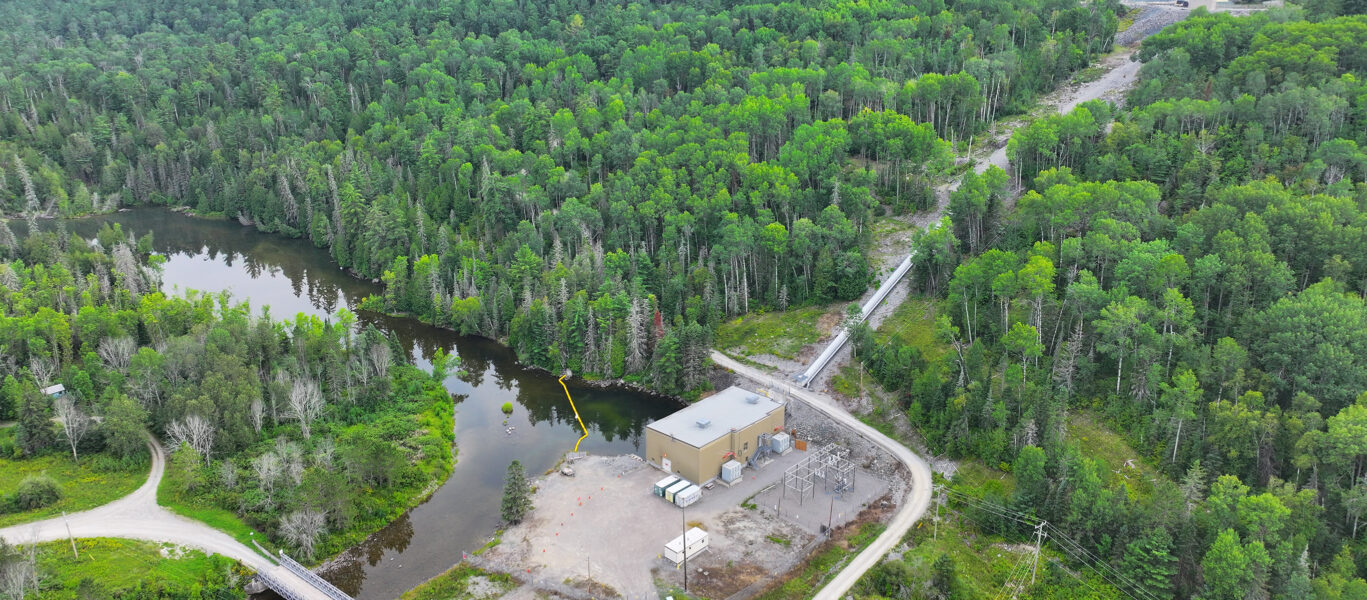
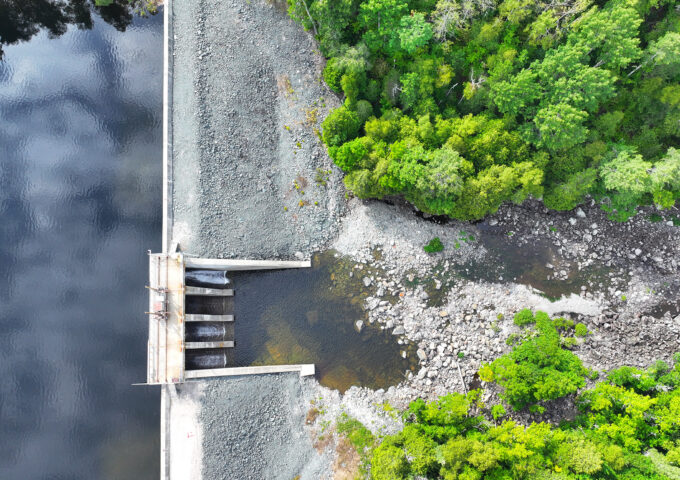
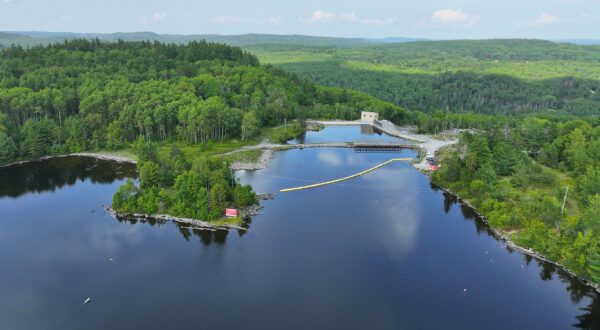
The Matabitchuan Generating Station (GS) is located 40 km southeast of Cobalt, Ontario, on the Matabitchuan River and within the Matabitchuan River watershed. The Matabitchuan GS is located within the traditional territory of Matachewan First Nation, Temagami First Nation, Timiskaming First Nation, Wolf Lake First Nation, and Kebaowek First Nation.
Matabitchuan GS is owned and operated by OPG, and the station is currently 114 years old, with much of its original equipment from 1910 still in operation. The station will reach end of life within the next five years according to a condition assessment commissioned by OPG in 2020.
Environmental Screening
Proposed waterpower facilities in Ontario are subject to the Environmental Assessment Act (EA Act). The EA Act formally recognizes the Ontario Waterpower Association (OWA) Class EA for Waterpower Projects (February 2024). This provides a planning process that allows waterpower facility proponents to assess potential effects of a waterpower project to the environment. The OWA Class EA applies to all waterpower projects to which Ontario Regulation 116/01 – Electricity Projects (2001) under the EA Act applies.
Some waterpower projects involve very minimal, short term and localized effects that can be addressed through other legislative mechanisms (e.g., Lakes and Rivers Improvement Act, Fisheries Act, etc.). A screening process has been developed to enable those projects to be screened and, subject to that the screening outcomes, exempt from the Ontario EA Act, and therefore the Class EA.
Projects that meet the following criteria qualify for the Class EA Screening process:
- Projects that are associated with existing water management infrastructure, such as a dam, a weir, or a lock. The existing water management infrastructure may be retrofitted, or refurbished/upgraded (as defined in Appendix A of the Class EA); and
- Projects that limit any increase in the footprint of the water management infrastructure to 25% or less.
The Matabitchuan GS Redevelopment Project meets the criteria for following the Class EA Screening process. The Project team has commenced studies to address the screening questions to confirm that there are no significant negative environmental effects anticipated from the Project after the application of mitigation measures and best management practices (BMP).
The following screening criteria in accordance with the OWA Class EA, will be used to determine if the Project is exempt from the EA Act. It should be noted that the answer to each of the following questions must be ‘no’, after considering BMP’s and mitigation measures for the screening process to be considered successful:
- Will there be a change in the water management regime, including a significant change to water flow, inundated area, or historical mean monthly maximum water level?
- Will contaminants be released into the immediate environment, and cause an exceedance of regulatory thresholds?
- Will there be any negative effects on provincially designated endangered species or their habitats?
- Will there be any negative effects on protected areas, such as areas of natural and scientific interest, environmentally sensitive areas, or provincially significant wetlands?
- Will there be a considerable increase in sedimentation or erosion on or off-site?
- Will there be any negative effects on known or potential built heritage resources or cultural heritage landscapes?
- Will there be any negative effects on archeological resources or areas of archeological potential?
Environmental Studies
- Baseline aquatic studies to support Fisheries Act permitting have been conducted and will continue through 2024.
- Terrestrial ecology studies have confirmed that there are no species at risk that will trigger Endangered Species Act
- Surface and groundwater conditions are being assessed to support construction dewatering activities.
- Archaeological studies have been completed and are under review by the Ministry of Citizenship and Multiculturalism. No archaeological impacts are anticipated based on study findings.
- A Cultural Heritage Evaluation Report has been completed and determined that the Matabitchuan GS is considered a provincial heritage property but is not considered a provincial heritage property of provincial significance. A Cultural Heritage Impact Assessment will be completed to identify any required mitigation measures to address potential impacts.